The Frozen Floor Strategy
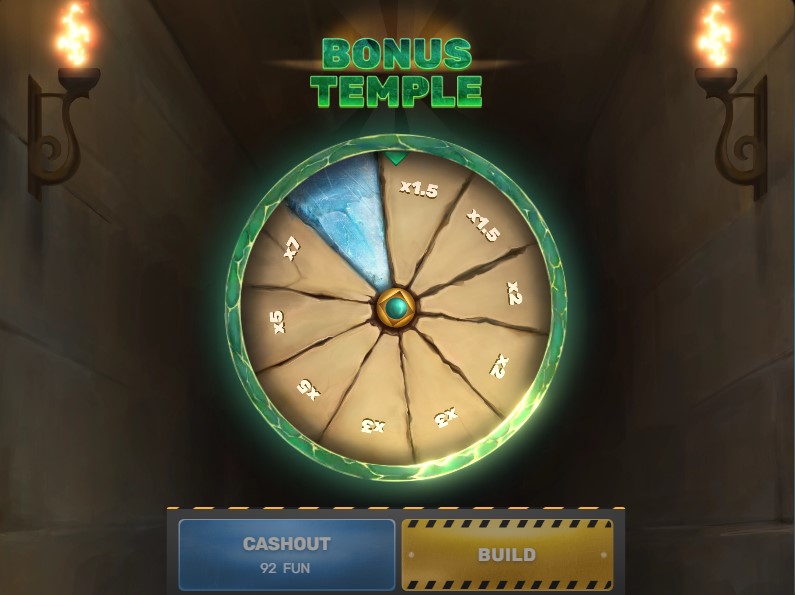
The Frozen Floor is one of the three in-game bonuses in Tower Rush. When it appears, the current block is automatically placed perfectly — no timing needed. This may seem like a small advantage, but it is strategically very valuable.
A Frozen Floor in phase 1 or 2 saves a placement and keeps the block at full width. Nice, but not game-changing. A Frozen Floor in phase 3, however, could save the entire round. On level 14 with a narrow block and high speed, manual placement would be a 50/50 gamble — the Frozen Floor turns it into a guarantee.
The strategy: When a Frozen Floor appears in phase 3, you can play more boldly afterward. The secured block provides a buffer of one level. Without a Frozen Floor, it might have been time to cash out — with a Frozen Floor, you can build one or two levels further.
The Frozen Floor appears on average every four to six rounds. You can't plan when it will come, but you can base your decision (to continue building or cash out) on whether it has appeared in the last levels.
When to cash out is the second timing decision in Tower Rush — and ultimately the more important one. Block placement determines how high the tower can go. The cash out determines whether you take the winnings with you.
We tested various cash out strategies over 100 rounds in real money mode and documented the results:
| Strategy | Cash Out at | Winning Rounds | Average Win | Total Result (100 Rounds, €1/Round) |
|---|---|---|---|---|
| Ultra-Conservative | x1.5 | ~75% | 1,50 € | +12,50 € |
| Conservative | x2.5 | ~55% | 2,50 € | +37,50 € |
| Balanced | x4 | ~38% | 4,00 € | +52,00 € |
| Aggressive | x8 | ~18% | 8,00 € | +44,00 € |
| Very Aggressive | x15 | ~8% | 15,00 € | +20,00 € |
The values are approximations from our tests — no guarantees. But the pattern is revealing: The balanced strategy (cash out at x4) delivered the best results in our tests. The aggressive strategy (x8) was almost on par but generated more variance — meaning: higher highs and lower lows.
The ultra-conservative strategy (x1.5) seems safe but leaves a lot of potential on the table. And the very aggressive strategy (x15) is mathematically risky, as only 8% of rounds reach that far.
The sweet spot for most players: Cash out between x3 and x6. This combines an acceptable win frequency with rewarding multipliers.
Timing on Smartphone vs. Desktop
Block placement responds differently to touch (smartphone) and click (desktop) — and that affects the timing.
Desktop (Mouse/Trackpad):The click is registered immediately. The latency between decision and action is minimal. The hand is already on the mouse, the finger on the button. For Phase 3 with high speed, the desktop is the more precise platform.
Smartphone (Touch):The finger must touch the screen, which creates slightly higher latency than a mouse click. Additionally, the screen is smaller, making visual assessment of block position more difficult. In Phase 1 and 2, the difference is negligible. In Phase 3, touch latency can make the difference between a successful and a failed block.
Our advice:For casual sessions with cashout at x3–x5, the smartphone is perfectly adequate. Those playing for high multipliers (x10+) should switch to desktop or tablet. The larger screen area and more precise input make a measurable difference in the higher levels.
| Criterion | Desktop | Smartphone | Tablet |
|---|---|---|---|
| Input precision | Very high | Medium | High |
| Screen size | Large | Small | Medium-large |
| Phase 1–2 suitability | Very good | Good | Very good |
| Phase 3 suitability | Optimal | Limited | Good |
| Recommendation | High-multi players | Casual sessions | All-rounder |
FAQ
Use the demo mode and internalize the rhythm of the blocks. Don’t tap reactively, but anticipate the beat. At least 50 practice rounds are recommended.
For Phase 1–2: no significant difference. For Phase 3 (high multipliers): yes, the desktop offers more precise input and better overview.
In our tests, x3–x6 was the sweet spot — a good balance between win frequency and multiplier height. The individual sweet spot depends on risk tolerance.
Enormously in Phase 3. An automatically perfect placement on level 13+ can save the round and allow for one or two additional levels that would be manually high-risk.
30–45 minutes maximum. After that, concentration wanes and placements become less precise. Short, focused sessions are more profitable than marathons.
It can be significantly improved, but never perfected — the increasing speed and in-game variance ensure that even the best players lose rounds. That’s the appeal of the game.
Our conclusion
Timing in Tower Rush has two dimensions: physical block placement and mental cashout decision. Both can be trained, and both have a measurable impact on the outcome.
Block placement is improved through the rhythm trick and consistent practice in demo mode. Cashout discipline is improved through strict rules and the ability to resist the inner "one more level" impulse.
The most important timing tip is also the simplest: Don't play in a rush. Tower Rush rewards concentration, not speed. Those who stay calm, feel the rhythm, and stick to their cashout plan will achieve consistently better results than someone who relies on adrenaline and hope.
Rating: 4.5/5
Gambling carries risks. Winnings are never guaranteed. Only wager money you can afford to lose. If you have a gambling problem, contact the BZgA: 0800 1 37 27 00 (free of charge).
How block placement works
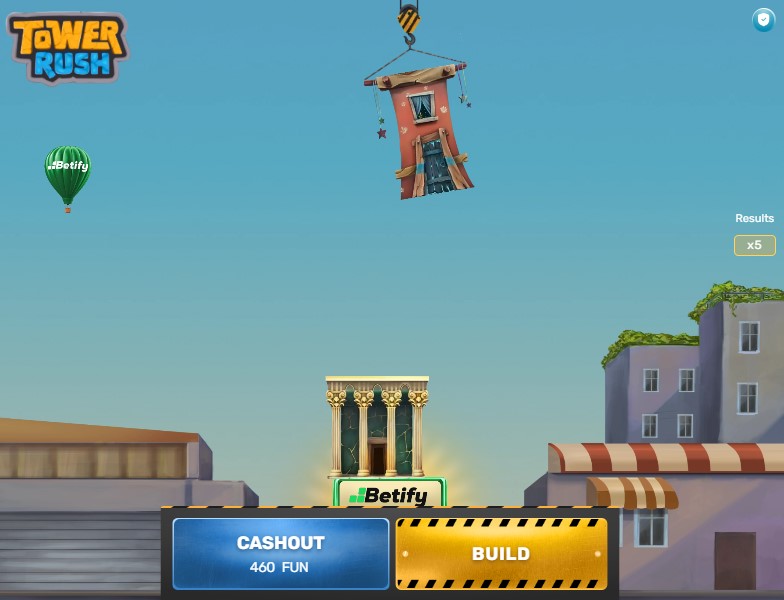
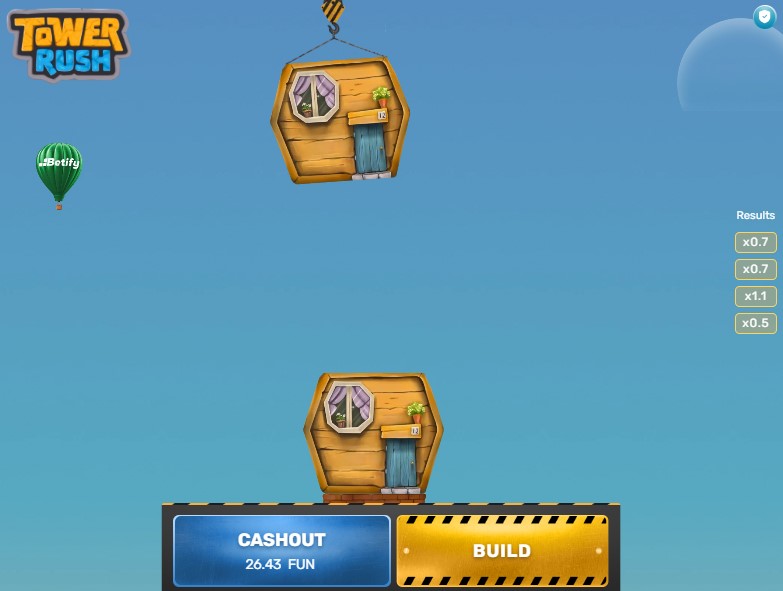
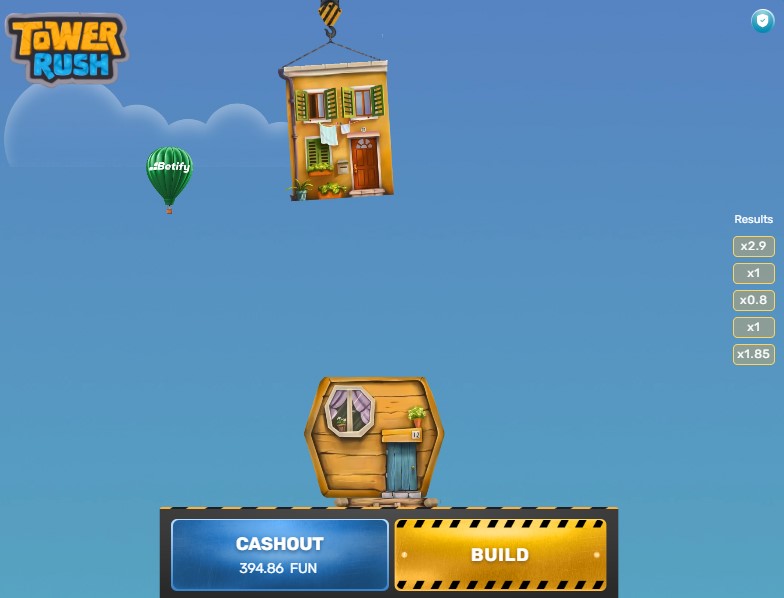
In each round of Tower Rush, a block hovers above the tower. This block moves horizontally — left, right, left, right — in a steady rhythm. The player taps (or clicks) to drop the block. Wherever the block is at the moment of tapping, that's where it lands.
The first challenge: The block must land on the block below it. The more accurately it is placed, the more stable the tower will be. A block that overhangs the edge will be cut off — the next block will be narrower. With each inaccurate placement, the target area shrinks until there is no space left and the tower collapses.
The second challenge: The speed of the block increases with each floor. The first five blocks swing slowly. From floor six, it gets faster. From floor ten, significantly faster. By floor fifteen, the movement is so quick that reaction time becomes the crucial factor.
The third challenge: The multiplier increases with each successful floor. This creates a psychological conflict — the mind says "cash out," the hand wants to keep building. Keeping this conflict under control is the invisible skill in Tower Rush.
The three timing phases
Each Tower Rush round can be divided into three phases, each with different timing requirements.
Phase 1: Building (Floor 1–5)
The blocks move slowly, and the target area is wide. This phase is not about precision but about consistency. A perfectly placed block in Phase 1 provides a safety buffer for the later phases because the block retains its full width.
Tip:Don't tap in a rush. Observe the block consciously, pick up the rhythm, and then tap when the block is centered over the tower. Those who are careless in Phase 1 and create side overhangs will already have a narrower block in Phase 2, leaving less room for error.
Common mistake:Playing too fast. Some players tap immediately because they want to reach the high multiplier. The result: imprecise placements in Phase 1 that compromise the rest of the round. Phase 1 is the foundation — it deserves care, even if it seems unremarkable.
Phase 2: Acceleration (Floor 6–12)
The speed increases, and the blocks become — if not perfectly placed in Phase 1 — narrower. This is where the timing of casual players separates from that of the experienced.
Tip:Anticipate the rhythm, don't react. Waiting until the block is over the center and then tapping is usually too late — because the reaction time of the finger is 100–200 milliseconds. Instead, learn the swinging rhythm of the block and tap slightly before the center. The block will position itself automatically through the swinging motion when you hit the rhythm.
Common mistake:Trying to hit the block at the turning point. The turning point (where the block changes direction) seems like the logical moment to tap — but at the turning point, the block is at the edge, not in the center. The right moment is when the block is moving towards the center, just before it arrives there.
Phase 3: Precision (Floor 13+)
Those who reach Floor 13 are in the upper range. The blocks are narrow (if previous floors were not perfect) and fast. Here, milliseconds matter.
Tip:Narrow your focus. Don't look at the whole screen, but only at the top edge of the tower and the block hovering above it. Everything else — multiplier display, bets, other players — should be ignored. Tunnel vision is an advantage in Phase 3.
Common mistake:Looking at the multiplier. If you look at the number when it's x15 and think, "if I can make it through three more floors, I'll be at x25," you lose focus on the block. In Phase 3, there should only be the block. The multiplier only becomes relevant at cashout.

The rhythm trick: How professionals time the block
Experienced Tower Rush players use a technique reminiscent of music games (rhythm games): They don't reactively tap on the block but tap in time with the swinging motion.
The block moves in a steady pattern: left → center → right → center → left. This cycle has a constant rhythm that accelerates with each floor. Those who internalize the rhythm don't tap "when the block is in the center," but "in time with the third beat" — similar to how a musician feels the rhythm of a song instead of counting each note individually.
The way there: Use the demo mode and consciously perceive the rhythm of the block. Don't play for precision, but for rhythm. After 20–30 rounds, a "feeling" for the beat develops that is faster and more reliable than conscious reacting.
This trick works particularly well in Phase 2, where the speed is high enough that reactive timing becomes difficult, but not so high that only reflexes count. In Phase 3, a mix of rhythm and reflex takes over — but the rhythmic foundation from Phase 2 also helps here.
Mental timing: The invisible factor
Timing in Tower Rush is not only physical (when to tap), but also mental (how to decide under pressure).
The loss spiral.Lost three rounds in a row. The impulse: take higher risks to recover losses. The result: hasty placements, missed cashout moments, even more losses. The solution: take a one-minute break after three losing rounds. Breathe deeply. Then continue playing with the same strategy as before.
The winning rush.A x12 multiplier. The adrenaline is pumping. The next block comes — and you want to keep going because "it's going so well." But the next block has nothing to do with the previous one. Each round is independent. The winning rush leads to inflated bets and risky cashout decisions. The solution: record the winnings, do not increase the bet, maintain the strategy.
The tunnel effect.Two hours of Tower Rush. Concentration wanes, placements become less precise. Fingers react slower. But you don't notice it because you're in the tunnel. The solution: set a time limit. 30–45 minutes per session, then take a break. The best Tower Rush players play short, focused sessions — not marathon sessions.
Exercises for better timing
Anyone looking to systematically improve their timing can perform the following exercises in demo mode:
Exercise 1: Zen Mode.Play 20 rounds where the goal is to place each block perfectly. No looking at the multiplier, no cashout pressure. Just block by block, as precisely as possible. Goal: develop a feel for the rhythm.
Exercise 2: Speed Run.Play 10 rounds where you try to reach level 15. No matter how many attempts it takes. Goal: get to know phase 3 and internalize the speed of the upper levels.
Exercise 3: Cashout Discipline.Play 20 rounds where you set a fixed cashout point before each round (e.g., x4) and stick to it consistently — even if the tower is stable and the multiplier would continue to rise. Goal: train cashout discipline, control greed.
Exercise 4: Bonus Reaction.Play 30 rounds and consciously pay attention to the three in-game bonuses. When do they appear? How does the round change? What is the optimal reaction? Goal: understand bonuses as tactical elements, not surprises.
Player reports on timing
⭐⭐⭐⭐⭐ (5/5) — "The rhythm trick has made a breakthrough for me. Before, I was reacting and rarely got past level 8. Since I started feeling the rhythm of the blocks, I regularly reach levels 12-14. My average multiplier has risen from x3.1 to x5.8 — and that's real money." — Alexander G., Munich, January 2026
⭐⭐⭐⭐ (4/5) — "Desktop makes a huge difference. On mobile, I was already at my limit in phase 2. On the laptop with a mouse click, the upper levels suddenly become achievable. Anyone serious about Tower Rush shouldn't play on a smartphone." — Marie F., Salzburg, February 2026
⭐⭐⭐⭐ (4/5) — "The cashout discipline training has honestly helped me more than the timing training. I was always able to place well, but I often missed the cashout because I thought I could go one more level. Now I set a limit for myself and stick to it. Less drama, more profit." — Nick H., Hamburg, February 2026